
Why the First Minutes After Oxygen Restoration Can Determine Cell Survival: The Protective Role of CO₂ and Acidity in the Heart
Abstract
Restoring blood flow after a period of ischemia (insufficient oxygen supply caused by reduced circulation) is essential for tissue recovery. However, the process of reintroducing oxygen can itself trigger damaging mechanisms. This phenomenon is known as reperfusion injury.
In this experimental study, Cohen, Yang, and Downey investigated how postconditioning protects cardiac tissue from damage during the restoration of blood flow.
The study was performed using isolated rabbit hearts. The researchers found that brief intermittent periods of reperfusion during the first minutes after blood flow restoration preserved tissue acidosis. This temporary acidic environment appeared to play a critical role in protecting heart cells.
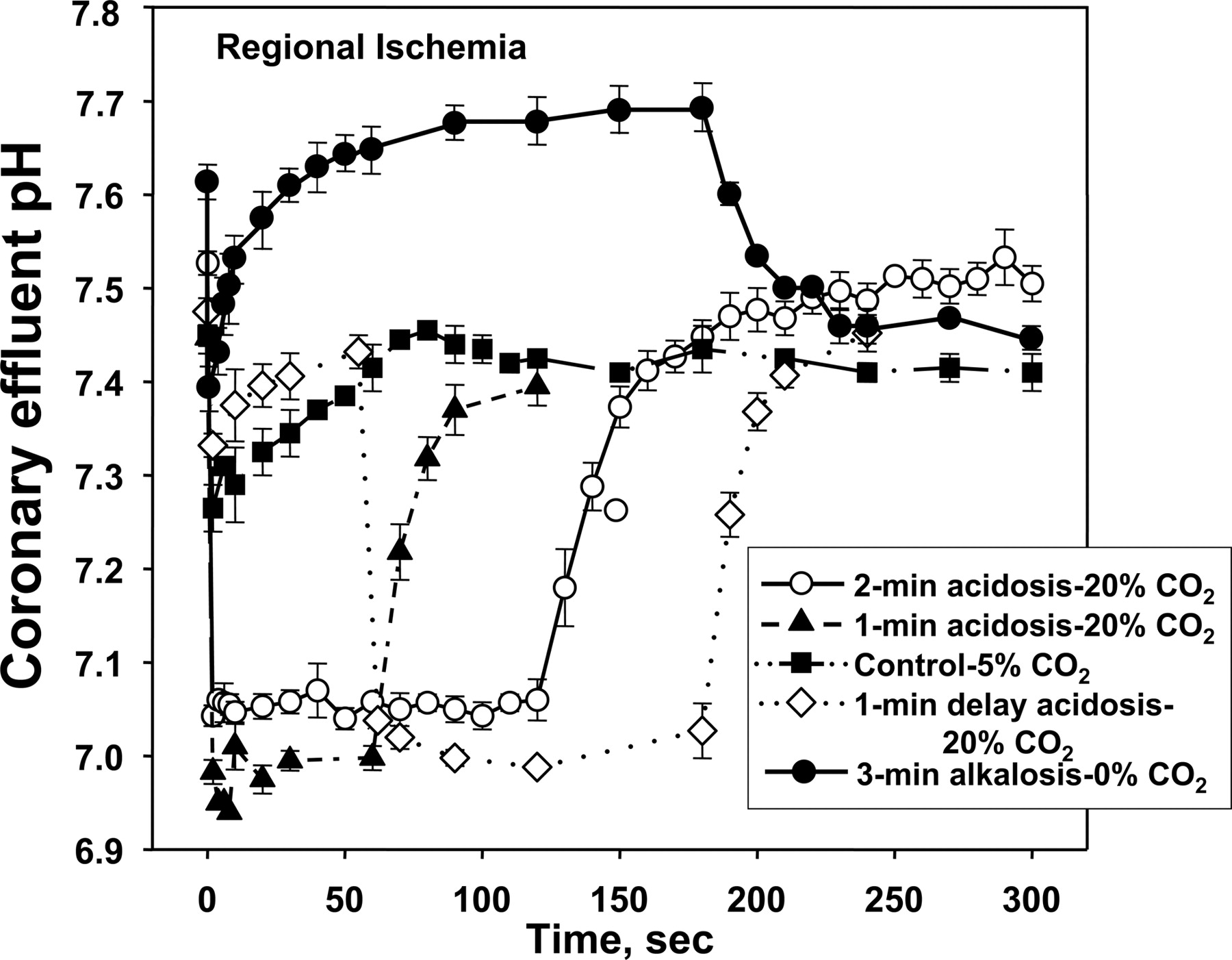
In the control group, infarct size was 34.4% of the area at risk. Two minutes of postconditioning reduced infarct size to 10.7%. A similar protective effect was achieved by applying a hypercapnic buffer with a low pH (6.9) during the first two minutes of reperfusion, resulting in an infarct size of 15.0%.
When researchers artificially removed the acidosis by increasing pH during the early phase of reperfusion, the protective effect was abolished. The authors concluded that maintaining an acidic environment during the first minutes of reperfusion delays the opening of the mitochondrial permeability transition pore (mPTP), allowing time for protective signaling pathways to become activated and preventing cell death.
Conclusions
This study provides important insight into the fact that restoration of oxygen supply after a period of oxygen deprivation is not always purely beneficial. The conditions under which oxygen is reintroduced can determine whether cells recover or undergo damage.
The findings demonstrate that elevated CO₂ levels and the resulting decrease in pH can have a protective role during a specific time window. Maintaining acidosis during the early phase of reperfusion prevents premature opening of the mitochondrial permeability transition pore — one of the key mechanisms involved in cell injury during restoration of blood flow.
In the context of hypoxic-hypercapnic training, this study highlights the biological role of increased CO₂ levels in regulating cellular processes. It demonstrates that changes in carbon dioxide concentration can influence not only breathing and acid–base balance but also intracellular signaling pathways involved in cellular stress resistance.
However, this study was conducted using isolated rabbit hearts and focused on an ischemia–reperfusion model rather than respiratory training in humans. Therefore, its findings provide mechanistic evidence for the role of CO₂ and acidosis in cellular protection, but they do not directly demonstrate clinical effects of hypoxic-hypercapnic training.
Full bibliographic information
Cohen MV, Yang XM, Downey JM. The pH hypothesis of postconditioning: staccato reperfusion reintroduces oxygen and perpetuates myocardial acidosis. Circulation. 2007;115(14):1895–1903.
DOI: 10.1161/CIRCULATIONAHA.106.675710
PMID: 17389262
